

Healthy Sitting Starts Young
A Better Start to the School Year
A new school year often means new books, new clothes, new routines — and increasingly, more time spent sitting.
Children and young adults sit while studying at school, doing homework, using a computer, gaming, reading and attending online classes. As they grow older, sitting becomes an even bigger part of everyday life.
Yet when parents prepare their children for a new school year, the place where they actually sit and study is often one of the last things we think about. Perhaps it should be one of the first.
Growing Bodies Need Movement
Children are made to move.
Movement supports healthy physical development, coordination and overall well-being. The World Health Organization recommends that children and adolescents aged 5–17 get an average of at least 60 minutes of moderate-to-vigorous physical activity every day and limit sedentary time, particularly recreational screen time.
But sitting itself cannot simply disappear.
School lessons, homework and studying all require it. The better question therefore is:
How can we make the time our children spend sitting better?
The answer starts by moving away from the idea that there is one “perfect” sitting position.
At BIOSWING, we believe that the best posture is always the next one.
Learn more about healthy sitting in the BIOSWING Sitting Academy

Why Static Sitting Is the Problem
Think about a typical homework session.
A young person sits down in front of a laptop. After a while, the shoulders move forward. The back begins to round. The head moves closer to the screen. Then they shift position, lean to one side, cross their legs or slide forward on the chair.
We often respond by saying:
“Sit up straight.”
But maintaining one rigid position for a long period is not how the human body naturally works.
Instead of trying to keep the body perfectly still, a healthy study environment should allow regular changes of position and encourage movement throughout the day.
That means standing up between tasks, walking around, stretching, spending time outdoors — and using a chair that does not unnecessarily restrict movement while sitting.
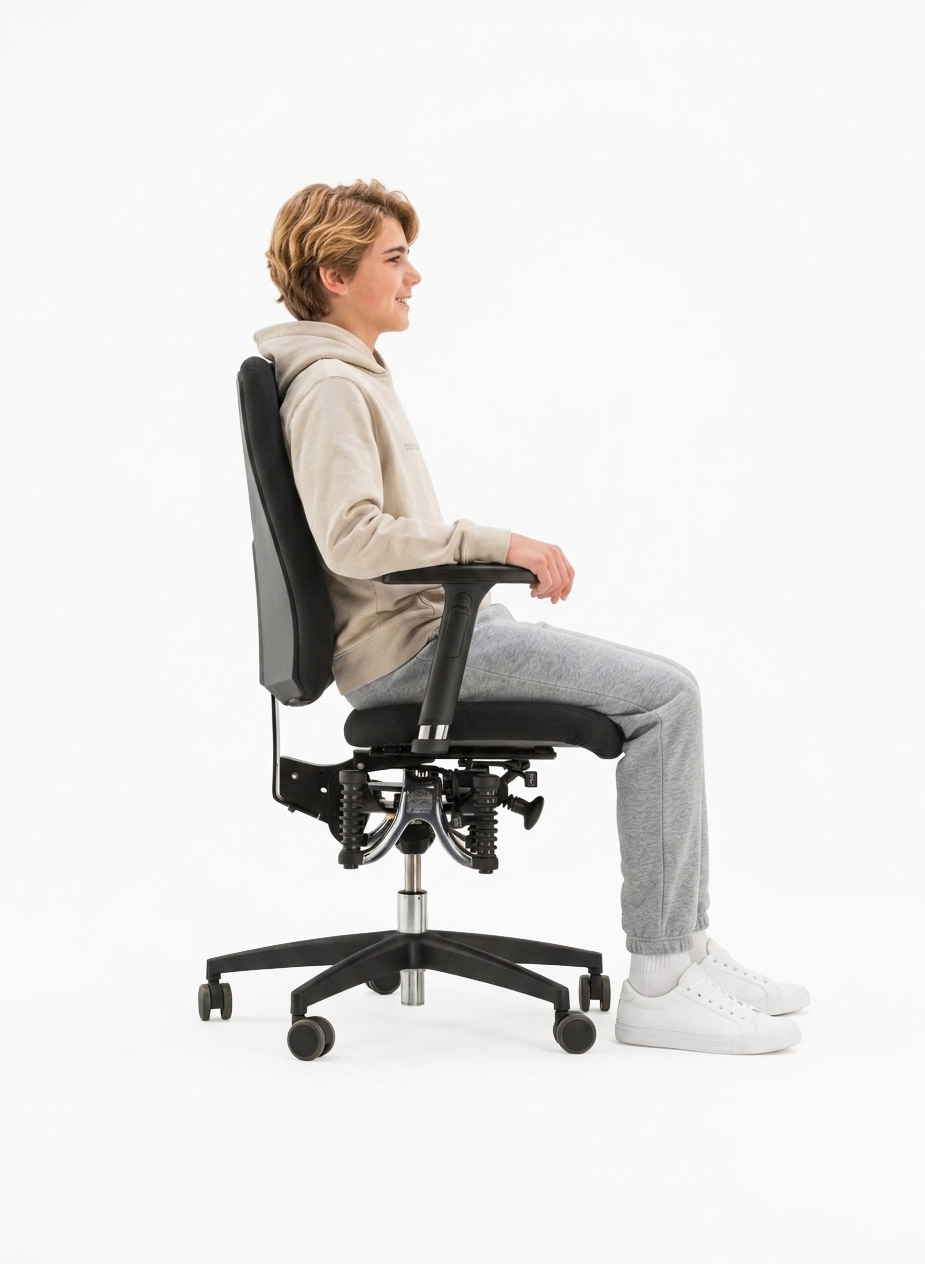
A Study Space Should Grow With the Student
A good study chair should not simply feel comfortable for five minutes in a furniture shop.
It should fit the person using it.
For children, teenagers and young adults, adjustability becomes especially important because their bodies are still changing.
When setting up a study space, pay attention to:
- Seat height — feet should be supported rather than hanging freely.
- Seat depth — the seat should support the thighs without pressing into the back of the knees.
- Back support — the chair should support rather than force the body into an unnatural position.
- Desk height — shoulders should remain relaxed while writing or using a keyboard.
- Screen position — avoid constantly bending the head downward toward a laptop.
- Movement — encourage frequent changes of position instead of trying to maintain one “correct” posture for hours.
And perhaps most importantly:
No ergonomic chair can replace physical activity.
A good chair should be part of an active lifestyle — not an excuse to sit longer.
From Static Sitting to Active Sitting
This is where the BIOSWING approach is different from a conventional office chair.
At the heart of every BIOSWING chair is an adaptive 3D seat mechanism. Instead of creating a completely static sitting surface, the system responds to small movements of the body.
The result is a sitting surface that moves with the person rather than simply holding them in one fixed position.
These subtle movements are the foundation of what we call dynamic sitting.
Discover how BIOSWING technology works
For adults, this can make a significant difference during long working days.
For young people developing the habits they may carry into university and working life, learning that sitting does not have to mean being completely still can be just as important.
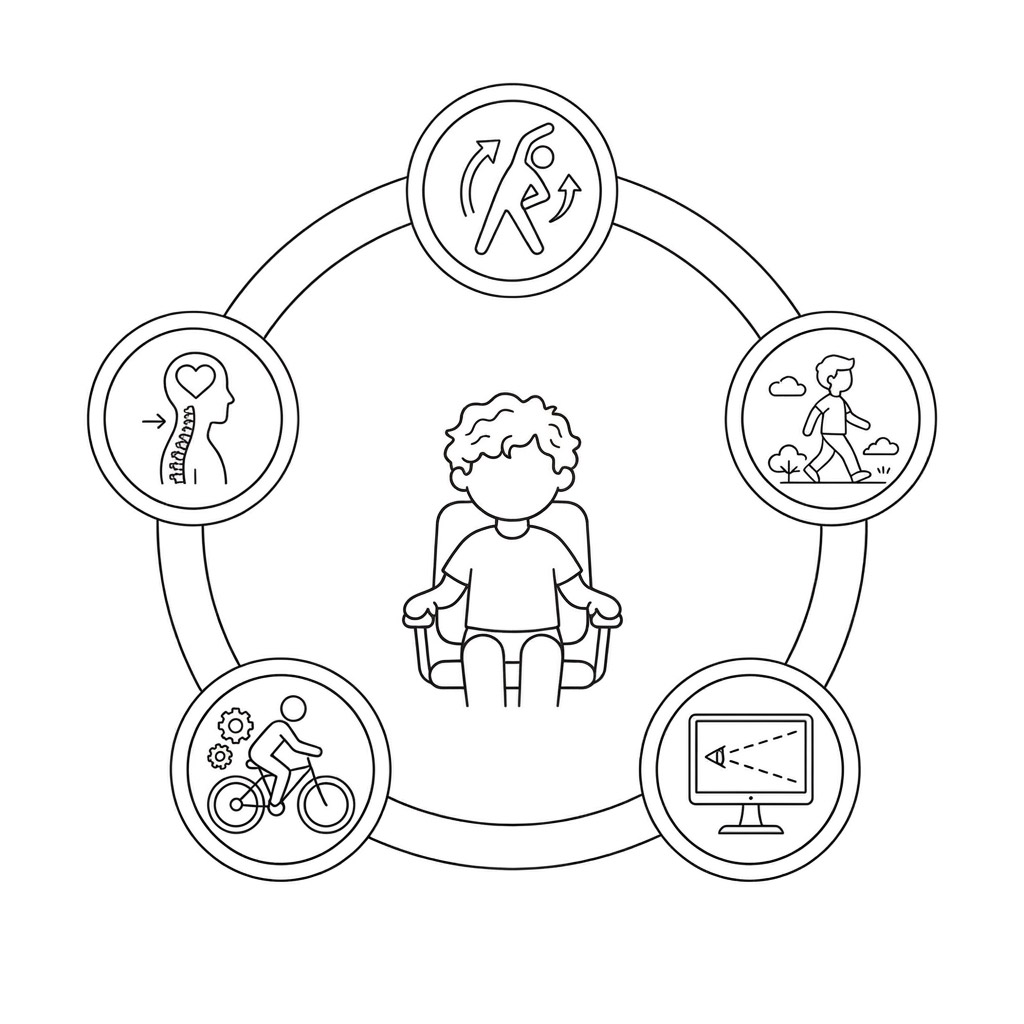
Five Healthy Study Habits to Teach Early
A healthy study environment is not created by a chair alone.
Try establishing a few simple habits at home:
- Change position frequently.
There is no need to search for one perfect posture and hold it all evening. - Get up between tasks.
Finished an exercise or chapter? Stand up, walk around or get a glass of water. - Keep screens at a sensible height.
Long periods looking down at a laptop can encourage a forward head and rounded posture. - Make movement part of the day.
Walking, cycling, sport and outdoor activity matter far more than any piece of furniture. - Take the study chair seriously.
If your child spends hours at a desk every week, the chair deserves the same consideration as the desk, computer or school bag.
Which BIOSWING Chair for a Young Person?
There is no universal chair for every child or teenager. Body height, leg length, desk height and individual proportions matter.
For older students, teenagers who are already approaching adult proportions, and university students, we particularly recommend looking at the BIOSWING 2-Series.
It combines the BIOSWING adaptive 3D seat mechanism with extensive ergonomic adjustment while remaining comparatively compact and straightforward.
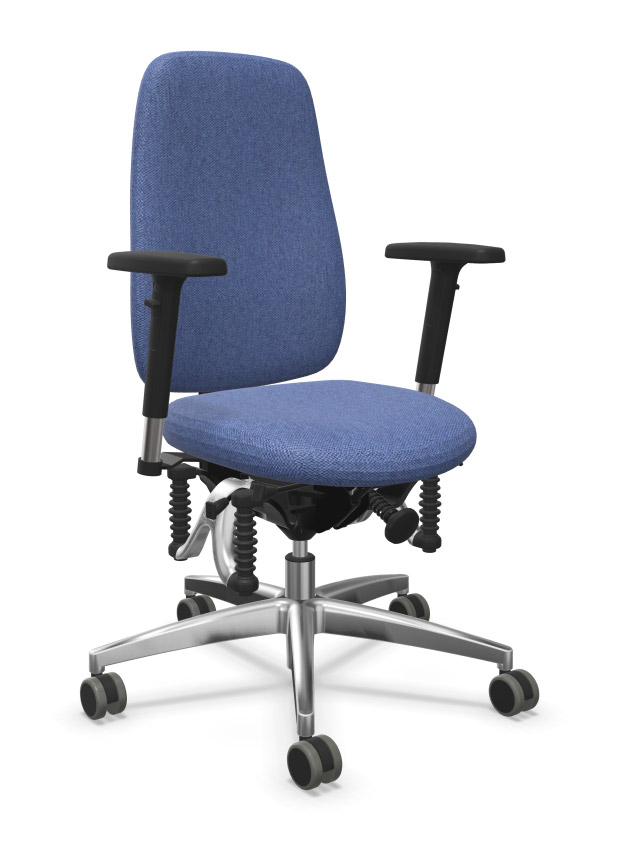
BIOSWING 260 iQ
For a dedicated home study space, the BIOSWING 260 iQ is our first model to consider.
Its adjustable seat depth, backrest height, seat inclination and armrests allow the chair to be adapted much more precisely to the person sitting in it.
For older students spending particularly long periods at a desk, the BIOSWING 3-Series offers an additional level of adjustment and comfort.
Discover the BIOSWING 3-Series
For younger children, however, choosing a chair purely by age is not enough. The chair must fit the child’s actual body dimensions and allow the feet to be properly supported.
If you are unsure, ask us before choosing.
The Best Investment Is a Healthy Habit
A quality ergonomic chair can last for many years.
But the most valuable thing we can give children is not a chair.
It is an understanding that their body needs movement.
Teach them to stand up. To change position. To go outside. To move while they study. And when they do need to sit, give them an environment that works with their body rather than against it.
Because healthy sitting habits don’t have to begin when back problems appear at 40.
They can begin with the very first desk.